
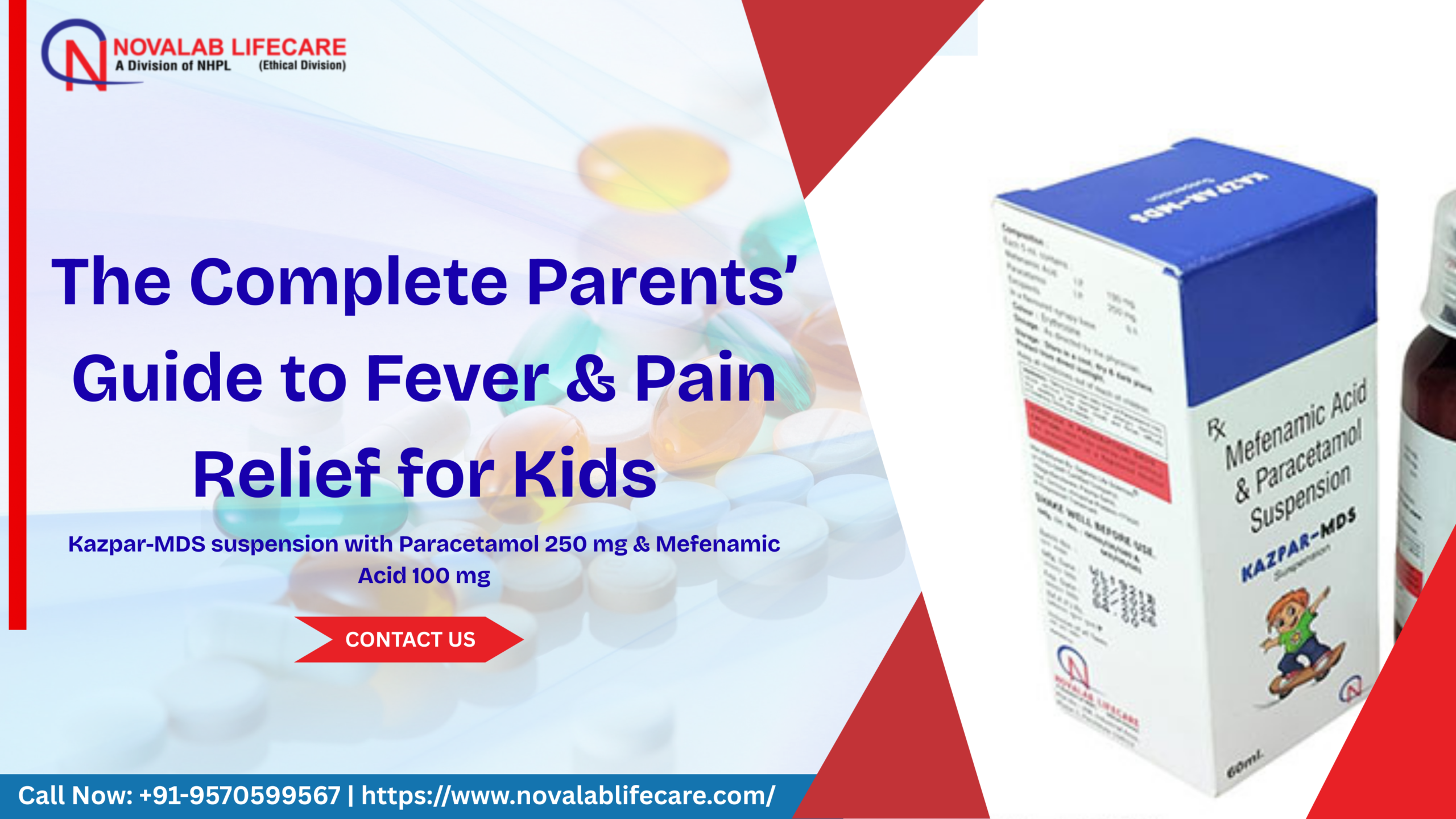
The Complete Parents’ Guide to Fever & Pain Relief for Kids
When your child is suffering from a high fever or persistent pain, as a parent, your primary goal is to provide fast and safe relief. Navigating the world of pediatric medicine can be overwhelming, but understanding the specific combination of ingredients in your child’s medicine can give you peace of mind.
One of the most effective combinations prescribed by pediatricians today is Paracetamol 250 mg and Mefenamic Acid 100 mg. This dual-action formula is found in Kazpar-MDS, a premium suspension by Novalab Lifecare. In this guide, we will explore everything you need to know about this medication, from dosage and benefits to safety precautions.
1. What is Kazpar-MDS Suspension?
Kazpar-MDS is a specialized oral suspension designed primarily for children and adolescents. It combines two powerful active ingredients: Paracetamol (250 mg) and Mefenamic Acid (100 mg) per 5ml dose.
While many medicines contain only one of these, Kazpar-MDS uses a “synergistic” approach. This means the two ingredients work together to tackle symptoms more effectively than they would alone.
- Paracetamol: Known globally as a reliable antipyretic (fever reducer) and analgesic (pain reliever).
- Mefenamic Acid: A Non-Steroidal Anti-Inflammatory Drug (NSAID) that excels at reducing inflammation and targeting moderate pain.
This combination is particularly useful when a child has a high-grade fever that isn’t coming down with paracetamol alone, or when pain is accompanied by swelling or inflammation.
2. Active Ingredients: How They Work
To understand why Kazpar-MDS is effective, we need to look at the science behind its ingredients.
Paracetamol (250 mg)
Paracetamol works by blocking chemical messengers in the brain that tell us we are in pain. It also acts on the heat-regulating center of the brain to lower body temperature during a fever. It is gentle on the stomach compared to many other pain relievers, making it a staple in pediatric care.
Mefenamic Acid (100 mg)
Mefenamic acid works by stopping the production of prostaglandins—chemicals in the body that cause inflammation, pain, and fever. Reducing these chemicals at the source, it provides deeper relief for conditions like toothaches, muscle aches, or post-surgical discomfort.
The Combination Advantage: When combined in Kazpar-MDS, these ingredients provide a “double-shield” against discomfort. Paracetamol starts working quickly to lower fever, while Mefenamic Acid provides longer-lasting relief and reduces any underlying inflammation.
3. Indications: When Should You Use Kazpar-MDS?
Kazpar-MDS is versatile. It isn’t just for a simple fever; it is indicated for a variety of conditions:
- High-Grade Fever: Especially when the fever is persistent.
- Toothaches: Excellent for dental pain or pain following a dental procedure.
- Muscle and Joint Pain: Helpful for growing pains or minor injuries from sports.
- Post-Vaccination Fever: Many children develop a fever after routine immunizations; Kazpar-MDS helps soothe this.
- Headaches and Earaches: Common complaints in school-aged children.
- Mild to Moderate Inflammatory Pain: Such as sore throats or minor swelling.
4. Dosage and Administration Guidelines
Getting the dosage right is the most critical part of administering Paracetamol 250 mg and Mefenamic Acid 100 mg suspension.
Important Rule: Weight vs. Age
While age is a helpful guide, weight is the most accurate way to determine a child’s dosage. Always consult your pediatrician for the exact dose tailored to your child’s needs.
General Dosage for Children (Approximate):
- Children 2–5 years: Usually 2.5ml to 5ml, depending on weight.
- Children 6–12 years: Usually 5ml to 10ml.
- Adolescents: Dose may be higher, but should not exceed the maximum daily limit.
Administration Tips:
- Shake Well: The medicine can settle at the bottom. Always shake the bottle of Kazpar-MDS vigorously before pouring.
- Use the Measuring Tool: Never use a household kitchen spoon. Use the measuring cup or syringe provided with the bottle to ensure accuracy.
- Time Intervals: Usually given every 6 to 8 hours. Never give more than 4 doses in 24 hours.
- With Food: It is best to give this suspension after a meal or with a glass of milk to protect the stomach from irritation.
5. Safety Precautions and Side Effects
While Kazpar-MDS is safe when used as directed, all medications carry a risk of side effects.
Potential Side Effects:
- Digestive: Nausea, mild stomach pain, or diarrhea.
- Skin: Mild rashes or itching (rare).
- Drowsiness: Occasionally, a child might feel a bit sleepy.
When to Seek Immediate Medical Attention:
- If your child develops a severe skin rash or hives.
- If there is swelling of the face, lips, or tongue.
- If the child experiences difficulty breathing.
- If you notice signs of jaundice (yellowing of eyes/skin).
Contraindications:
Do not use this medication if your child has a known allergy to NSAIDs (like Ibuprofen or Aspirin), has active stomach ulcers, or severe kidney or liver disease.
6. Why Choose Kazpar-MDS from Novalab Lifecare?
In a market flooded with pediatric medicines, Novalab Lifecare stands out for several reasons:
- Quality Standards: Novalab follows strict WHO-GMP guidelines, ensuring that every batch of Kazpar-MDS is pure, potent, and safe.
- Palatability: We understand that children hate bitter medicine. Kazpar-MDS is formulated to be palatable, making it easier for parents to administer without a struggle.
- Affordability: Quality healthcare should be accessible. With an MRP of ₹84 for a 60ml bottle, it provides high-end pharmaceutical care at an honest price.
- Trusted by Professionals: Doctors across the country trust the Novalab name for its commitment to pediatric health.
7. Tips for Parents: Managing a Sick Child
Giving medicine is only one part of the recovery process. Here are some extra tips for parents:
- Hydration is Key: Fever can lead to dehydration. Ensure your child drinks plenty of water, soups, or ORS.
- Keep it Cool: Dress your child in light, breathable cotton clothes. Avoid heavy blankets during a fever.
- Tepid Sponging: If the fever is very high, use a cloth dipped in lukewarm water (not cold water) to sponge the child’s forehead and body.
- Record Keeping: Keep a small notebook to track the time you gave the medicine and the temperature readings. This is very helpful for your doctor.
8. Frequently Asked Questions
Q: Can I give Kazpar-MDS to an infant under 6 months?
A: You should never give Mefenamic acid combinations to infants under 6 months without direct supervision and a specific prescription from a pediatrician.
Q: What if I miss a dose?
A: If you miss a dose, give it as soon as you remember. However, if it is almost time for the next dose, skip the missed one. Never double the dose to make up for a missed one.
Q: Can I give this along with other cold/cough syrups?
A: Check the labels of other syrups. Many cold medicines also contain paracetamol. Giving both could lead to a dangerous overdose. Always check with a pharmacist or doctor before “stacking” medicines.
Q: How should I store the bottle?
A: Store in a cool, dry place away from direct sunlight. Keep it out of the reach of children to prevent accidental ingestion.
Conclusion
Kazpar-MDS (Paracetamol 250 mg and Mefenamic Acid 100 mg suspension) is a powerful, reliable, and essential tool in a parent’s medical kit. By combining the fever-fighting power of Paracetamol with the anti-inflammatory strength of Mefenamic Acid, Novalab Lifecare has created a formula that helps children get back to their happy, playful selves faster.
Always remember that medication is most effective when used correctly. Follow the dosage instructions, monitor your child’s symptoms, and always keep your pediatrician in the loop.
